Thursday, February 14, 2008

Happy Valentine's Day - Be good to your heart!

Happy Valentine's Day - Be good to your heart!

Healthy Heart Tips

  • Cardiovascular training, such as aerobics and running, strengthens the heart and enables it to pump more efficiently, so that fewer beats per minute are required.
  • Choose an exercise you enjoy. It can be a long walk in the park, swimming, dancing, yoga, jazzercise, circuit training, step class, spinning, skipping, running, biking, tai chi, as long as you do it regularly. This means at least 30 minutes, 3 times a week on a regular basis.
  • Remember to work at your own pace and that more is not necessarily better. Studies have shown significant health benefits from a 30-minute walk three times a week, so do not feel that you have to join the nearest health club or buy a lot of expensive exercise equipment.
Australiasian College of Health Sciences © 2008

For information about any of our programs at ACHS please contact an admissions advisor today! Call 800.487.8839 or email admissions@achs.edu.

Friday, January 25, 2008

Healing with Bach Flower Essences

Here is an interesting link to some research on Flower Essences:
By clicking on the below link you will download a PDF file regarding Bach Flower Essences. If it does not automatically download on the webpage that will appear click on the "Begin manual download" link.

Subject: Clinical research shows Rescue Remedy reduces acute situational stress

Link to a recent study demonstrating that Rescue Remedy works:
PDF Download of Rescue Rememdy Research

Thursday, January 24, 2008

Kids Cold Remedies

Kids Cold Remedies

IT’S COLD & FLU SEASON – KEEP YOUR CHILDREN HEALTHY
When your child gets a cold or the flu, everybody’s miserable! You want to do something to help them, but what?

OVER THE COUNTER COLD MEDICINES COULD BE DANGEROUS!
In an article on November 1, CNN reports ”These medications have been blamed for more than 100 deaths and at least thousands of trips to the emergency room.” You’ve probably read some of the many news stories about the dangers of children’s over the counter cold and flu remedies. An FDA panel recommends using no cold medicines for children under 6, and to use caution with children even up to 12.

THE APOTHECARY SHOPPE HAS NATURAL ALTERNATIVES
Simple ingredients and instructions are available for natural alternatives to these potentially dangerous medicines are available at many local & online stores,. One such is The Apothecary Shoppe, which carries a large selection of Homeobotanicals, herbs, essential oils, books and charts, including many of those listed below. Ordering online is an easy way to get the ingredients you need all in one place, and have them delivered right to your door.

Click here to go to the Cold & Flu – Just 4 Kids section:
http://www.apothecary-shoppe.com/index.php?cPath=73

ADVICE FROM A PROFESSIONAL.
Deborah Halvorson, BA, Dip Aroma, RA and Instructor at Australasian College of Health Sciences has some natural remedy advice for concerned parents and caregivers “I've never used over-the-counter cold remedies with my kids, just herbs and essential oils, and when the colds start going around, my kids generally get over it much quicker than their friends and classmates.”

One of her favorite cough remedies is vapor balm, a natural alternative to vaporub (adapted from a recipe in Kathy Keville/Mindy Green's Aromatherapy, A Complete Guide to the Healing Art):
Vapor Balm
1 cup Olive oil
3⁄4 oz. beeswax
1 1⁄2 tsp Eucalyptus (E. smithii) essential oil
1 tsp. Peppermint (Mentha x piperita) essential oil
1⁄4 tsp Thyme (Thymus vulgaris ct. linalool) essential oil

Melt beeswax and olive oil in top of double boiler. Allow to cool a bit and add essential oils. Pour into clean containers, label and date. To use, rub a small amount on the child's chest.

“When my child wakes up coughing in the middle of the night, I rub the vapor balm on his/her chest; the coughing stops almost immediately and the child (and mom) are able to get back to sleep. “ For children two to ten years old, use Eucalyptus smithii and Thyme linalool; for older children and adults, E. globulus or E. radiata and Thyme ct. thymol can be used. For children ages 12 months to 2 years, the above recipe can adapted using only the Eucalyptus smithii and leaving out the Peppermint and Thyme oils.

A combination of Lemon (Citrus limonum) and Marjoram (Origanum marjorana) essential oils is helpful if the child has a cold/flu with a fever. Lemon will help reduce the fever, and Marjoram is great for respiratory infections and will help the child sleep. Blend 10 drops of Lemon with 5 drops Marjoram and use 1 drop of the blend in a warm bath before bedtime or nap time, or use the blend in a nebulizing diffuser.

Steam inhalation is a very effective way to administer essential oils if there is nasal congestion or sinus infection. For children over the age of five, use 3 to 5 drops of essential oil to six cups of water; boil the water and pour into a bowl, then add the essential oils. Have the child inhale the steam, being sure to keep their eyes closed and their face 8 to 12 inches from the bowl. For children under the age of five, rather than having them directly inhale the steam, place the bowl in the same room as the child and they will receive the benefits of the essential oils being dispersed into the air via the steam. Essential oils that are effective and safe for children include:
Cedarwood (Cedrus atlantica) - An expectorant, strengthens the immune system, has a calming/sedative action
Frankincense (Boswellia carteri) - Immune system stimulant, helps with cough and bronchial congestion
Manuka/New Zealand Tea Tree (Leptospermum scoparium) - Is effective for bronchial congestion/bronchitis, sinus congestion/sinusitis, and has been shown to inhibit the growth of streptococcus (bacteria that cause strep throat) as well as bacteria that cause pneumonia.
Marjoram (Origanum majorana) An expectorant; helpful for respiratory infections and sinusitis; has a calming action
Rosemary (Rosmarinus officinalis) - Useful for respiratory infections and sinusitis (can be stimulating, do not use before bedtime)
*Peppermint (Mentha x piperita) - Is useful for sinusitis and bronchitis. *Should not be used with children under the age of two

A room spray can also be used, and will not only benefit the sick child, but help stop the spread of germs and keep other family members from catching the cold/flu. Here's a sample recipe:
4 oz. distilled water
10 drops Manuka/New Zealand Tea Tree (Leptospermum scoparium)
10 drops Lemon (Citrus limonum)
5 drops Lavender (Lavandula angustifolia)
5 drops Marjoram (Origanum majorana)
3 drops Frankincense (Boswelia carterii)
Pour into a 4 oz glass spray bottle. Shake well before spraying. Can be sprayed into the air or onto doorknobs or bathroom surfaces. Do not spray directly onto wood or plastic surfaces.

Warm tea with honey (no honey for children under 12 months old) is soothing and comforting. Lemon balm (Melissa officinalis) is a favorite of mine for reducing fever and calming fussy children. For coughs and achiness from the flu, the Lemon balm can be combined with Peppermint and Chamomile (Matricaria recutita).

If you have questions regarding any products or have interest in any courses regarding holistic health feel free to call us at 800-487-8839 and ask for the apothecary shop or an admissions advisor.

Friday, January 04, 2008

ACHS Graduate Heidi North continues her successes in Herbalism

ACHS Graduate Heide North continues her successes in Herbalism

ACHS Diploma in Herbal Studies Graduate and 2005 DETC Outstanding Graduate of the Year
Heide North has continued to build upon her success with her business, Urban Herbal Woman. Her business has recently also started a new venture (Pure Skincare) to expand others’ knowledge of skin care.

“Pure Skincare was originally created to provide people a natural, affordable option for their skin care needs. We feel that everyone - women, men, and especially children - are being exposed to far too many chemicals in the environment. It is our goal to educate consumers, and provide them with the best alternative for their skin.”

In order to touch the most people, Heidi has started a program to teach making and selling skin care products. “It is our goal to offer a business opportunity for those wanting to be home and have their own business.”

For further information visit the Urban Herbal Woman website. www.urbanherbalwoman.com


For further information about the Diploma in Herbal studies at ACHS or any of our other programs please contact an admissions advisor today! Call 800.487.8839 or email admissions@achs.edu.

Wednesday, December 05, 2007

The Red Hot Chili Peppers


I am a self-described foodie. I love to eat. I also love to cook or even just do a bit of food preparation. I get very excited when I find food that not only tastes good but also has observable physical benefits. For this holiday season, behold the wonderful and extremely versatile chili pepper! (No, not the southern California rock band.)

The chili pepper or spicy pepper (such as jalapeno, cayenne, or habanero) contains the chemical Capsaicin. Capsaicin, is the hot pepper’s natural heat-causing mouth-sizzling chemical; and has been proven to kill cancer cells, prevent sinus infections, serve as an anti-inflammatory agent, provide gastric relief, and even produce fat oxidation.

Hot peppers can help breathing, relieve aches and pains, and even help an individual burn up to an additional 50 calories per day! Sorry - that is not an excuse to have that extra slice of holiday pie (around 300 calories or more). According to research, hot peppers have the same metabolic effects as Ephedra without containing Ephredra’s negative cardiovascular side effects. Recent medical research is targeting the use of peppers and Capsaicin to fight cancer! Further research is also showing the use of peppers in pain relief post surgery - from the associated press – click on the following link:
Peppers for pain relief

If you get really into hot peppers, you may want to explore their heat rating. It is called the Scoville scale and can be found at the following web link:
http://en.wikipedia.org/wiki/Scoville_scale

So, spice up the holidays and add some peppers to your festivities! Try some finely diced peppers in your all-natural greens salad; or add them to your favorite roasted vegetables or meat. Great in that organic free-range egg omelet breakfast… Even add some to that favorite sandwich made of left-overs.

For the holiday dessert…
Try adding a just a bit of cayenne to that holiday apple pie; a little goes a long way and it gives a nice zip to the sweet.

If you have further interest in holistic health and nutrition review the Australasian College’s Nat 308 Holistic Nutrition course or Holistic Health Practice Program at www.achs.edu and contact an advisor today at 800-487-8839!

Happy holidays and good eating! Now where did I put that cayenne for my popcorn?

Joel Strimling
Student Services

Tuesday, November 20, 2007

ACHS 4th Annual Holiday Open House A Success!

The ACHS 4th Annual Holiday Open House was a great success! The Holiday Open House is a favorite of many who wish to give natural gifts to their loved ones.


During the open house, we learned how to make several preparations including:

Peppermint Foot Scrub - Visit us online here to view the kit from the Apothecary Shoppe.

Lemon Hand and Nail Butter - Visit us online here to view the kit from the Apothecary Shoppe.

Holiday Ambience Blend - Also available from the Apothecary Shoppe online here.

The 2008 ACHS on-campus scheduled will be available shortly. Check the Calendar online here for upcoming events. We hope to see you!

Wednesday, October 31, 2007

ACHS Partners with The United Aromatherapy Effort to bring aromatherapy relief to rescue workers in the Southern California Wildfires

Australasian College of Health Sciences is proud to support the United Aromatherapy Effort (UAE,) a not-for-profit charitable organization providing stress relief and aromatherapy to relief workers during emergency work and afterwards. ACHS is shipping air freshener sprays down to the UAE staging area in Huntington Beach, CA. These sprays, prepared from pure therapeutic organic oils, have been formulated by ACHS’s President, Dorene Petersen, to help support ease of breathing in smoking, ash filled air. “UAE provided a wonderful opportunity for ACHS to send some relief to those affected by the terrible fires. I chose essential oils that are traditionally known for supporting respiratory stress, such as lavender, rosemary, fir, peppermint and tea tree,” said Dorene.


The collection effort is being administered by Deborah Halvorson, one of Australasian College of Health Sciences’ adjunct instructors. Deborah is also Director of the National Association for Holistic Aromatherapy, and a Registered Aromatherapist. Deborah lives in the affected area and has generously volunteered to coordinate the collection and dissemination of the donations to the teams.


Aromatherapy has many benefits in disaster areas. The United Aromatherapy Effort collects and disseminates donated aromatherapy products, in conjunction with chair massage, to those affected by disaster. It is for this reason that the United Aromatherapy Effort teamed up with the Emergency Response Massage International (ERMI) to provide assistance to those dedicated and heroic individuals. ERMI's mission is to provide a 15-minute stress relief chair massage to first responders and relief workers following a disaster or other critical incident. Historically they have responded to NY (2001), Florida Hurricanes (2004) and most recently the Gulf Coast affected by hurricanes Katrina and Rita, and now are helping those in the Southern California area affected by the wildfires. For more information about The United Aromatherapy Effort, visit http://unitedaromatherapy.org/index.php3. For more information on the benefits of essentials oils visit http://www.achs.edu/aromatherapy/aromatherapy.aspx?id=1.

Purifying Blend includes the following essential oils:
Lavender Lavandula angustifolia - analgesic and antispasmodic
Rosemary Rosmarinus officinalis - analgesic
Fir Needle Abies canadensis - analgesic and expectorant
Peppermint Mentha piperita var. vulgaris - analgesic and antispasmodic
Tea Tree Australia Melaleuca alternifolia - expectorant

Friday, July 27, 2007

Make a Lavender Wand!

Making Lavender Wands

The Lavender Distillation and Open House was a wonderful success! We had many turn out and watch the distillation demonstration by President Dorene Petersen as well as enjoy the Lavender Wand Making talk by Tracey Miller. It was a gorgeous sunny day here in Portland and many bunches of lavender were picked by all!

For those of you who missed it we'd love to share a portion of the day with you. Find below a link to the audio of Tracey's Lavender Wand Making Demonstration and the accompanying instructions. Enjoy!

Making a Lavender Wand Demonstration (.mp3)
Lavender Wand Instructions (.pdf)

Tuesday, May 15, 2007

In The News: ACHS Aroma 401 Student - Betty Chang

Herbalists' shop full of healing teas

By LINDA BLADHOLM

food@MiamiHerald.com


ON BIRD ROAD: Betty Chang burns a cleansing bundle of sage at BA Natural Body Care.
LINDA BLADHOLM / FOR THE MIAMI HERALD

Step into BA Natural Body Care in a scruffy strip mall along Bird Road and be transported to a Taiwanese healing center. The compact space is lined with glass jars of teas, herbs, and herbal blends for ailments from insomnia to colds. There are also soaps, honey, teapots and vials of essential oils.

The BA is for Betty and Amy, the sisters who run the place along with their mother, Maria Huang. Each morning one of the sisters purifies the shop by lighting a bundle of dried sage. The pungent smoke rises from the flaming leaves held over an incense bowl to cleanse away any bad energy.

The Huang family emigrated from Kaoishiung in southern Taiwan in 1995, joining family members in Miami. Maria had trained as an herbalist, and her daughters took courses here in aromatherapy and Chinese herbal healing. They opened the shop about six months ago. Click here for the rest of the article.

Businessman Enjoys Sweet Smell of Success

Aromatherapy - The quality of the essential oils Robert Seidel sells earns him a following

Thursday, April 26, 2007

POLLY CAMPBELL

In 1977 Robert Seidel started a business that made a lot of scents but not much money.

In fact Seidel, 56, says the first few years he made no money at all.

But 30 years later, The Essential Oil Co., a wholesaler of essential plant oils based in the Sellwood neighborhood of Southeast Portland, grosses about $1 million annually.

Last month he shared trade secrets with students at Clackamas County's Tree School, an annual program targeted to those in forestry and timber management fields sponsored by the Oregon State University Extension Service, Clackamas Community College and local forestry groups.

"Oils are a value-added product," Seidel said. "When you harvest a tree you can collect the branches that you cut off and distill the oil." Click here for the rest of the article.

Monday, March 26, 2007

ACHS Graduate Dorothy McCall Featured in Sniffapalooza Magazine


ACHS Graduate Dorothy McCall Featured in Sniffapalooza Magazine

An Interview with ACHS Aromatherapy Graduate Dorothy McCall is featured in the most recent issue of Sniffapalooza Magazine.

Dorothy McCall is a graduate of Australasian College's accredited clinical aromatherapy program, Aroma 201 Certificate in Aromatherapy.

Read the full article online here.

Thursday, February 08, 2007

Important Lavender Essential Oil Research Review

The following is a review of a recent small study on lavender oil and its potential estrogenic effects (with associated breast enlargement in young boys) by ACHS Professor Dr. Arianna Staruch ND.

You may also view this full review online at http://www.achs.edu/news/news-detail.aspx?nid=76.

This recent experience highlights that essential oils contain biologically active constituents which can have physiologic effects when used topically. The use of these oils should be by those with appropriate training. Indiscriminate exposure of the public to essential oils may need to be evaluated for possible risks.

Is Lavender Essential Oil Associated with breast enlargement in young boys?

A study published in the NEJM this week raised the possibility that lavender essential oil found in common beauty products had caused breast enlargement (gynecomastia) in three young boys in Colorado. The breast enlargement resolved when the boys stopped using the products. The products all contained lavender essential oil, and included a healing balm, soap, body lotion, shampoo and hair gel. (The shampoo and hair gel also contained tea tree oil.) Hormone levels in all three boys remained normal throughout.
The researchers then tested tea tree and lavender oil in vitro, and both were found to stimulate the estrogen receptor and block the androgen receptor. This kind of disruption of hormone signaling pathways is thought to be responsible for gynecomastia and early puberty associated with known endocrine disruptors such as soy, pharmaceuticals, dioxins, furans, and organohalogens. Assessment of estrogenic activity of essential oil constituents has found that citral and geraniol can bind to estrogen receptors in vitro, but did not show estrogenic activity in a mouse model. Lavender essential oil contains geranyl acetate, a compound related to geraniol.

So was it the lavender that cased the abnormal breast enlargement? We can only suspect but not be sure. Because the gynecomastia resolved when the products were stopped, we can make a strong assumption that the products were the cause. None of the boys had been exposed to any known hormone disruptors including soy. The only obvious similarity in the products was the presence of lavender oil, however even the author of the study states that we cannot rule out that other components in the products also possess endocrine disrupting capability. Lavender essential oil was shown in vitro studies to bind to and stimulate the estrogen receptor but animal studies have not shown that this binding translates to estrogenic activity in vivo. However, children are extremely sensitive to estradiol, and no threshold has been established below which no hormonal effects can be seen in children exposed to known endocrine disruptors.

Does this mean that lavender essential oil is not safe for use in children? Compared to the number of children that are exposed to products containing lavender essential oil every day, only a very few may have had this response. In fact in the reported study, a fraternal twin brother of one of the boys also used the lavender skin lotion, but not the lavender soap, and did not show any signs of gynecomastia. However it is only prudent to be aware that the indiscriminate use of essential oils in frequently used household and beauty products may pose some risk to some children.

Should we change the way use lavender essential oil therapeutically? Lavender essential oil has long been viewed as an oil with few if any contraindications or side effects. In light of this study, maybe we should reconsider the use of lavender during pregnancy, nursing or in those with a history of hormone sensitive cancers.

This recent experience highlights that essential oils contain biologically active constituents, which can have physiologic effects when used topically. The use of these oils should be by those with appropriate training. Indiscriminate exposure of the public to essential oils may need to be evaluated for possible risks. It is recommended that the public seek out a Registered Aromatherapist (RA) by searching the Registered Aromatherapists Register at http://www.aromatherapycouncil.org/index.html. All RA's have passed the national ARC Registration Examination in Aromatherapy and have completed a minimum of a one year Level 2 program in aromatherapy from a college or school that is in compliance with the current NAHA Educational Guidelines. Registration is a mark of the candidates dedication to the Aromatherapy field and to the safety of his or her clients and customers.

# # #

Footnotes:

How do environmental estrogen disruptors induce precocious puberty? Massart, et al; Minerva Pediatr 2006 Jun; 58(3):247

Assessment of estrogenic activity in some common essential oil constituents. Hoews MJ, et al; J. Pharm Pharmacol. 2002 Nov; 54(11):1521

Anticonflict effects of lavender oil and identification of its active constituents. Umezu T; et al; Pharmacol Biochem Behav. 2006 Dec; 85(4):713

The sensitivity of the child to sex steroids: possible impact of exogenous estrogens. Aksglaede L, et al; Hum Reprod Update. 2006 Jul-Aug; 12(4):342
--
Dorene Petersen
President
503.244.0726 x14
_______________________
Come visit the ACHS Blogs:
http://www.achs.edu

Australasian College of Health Sciences. 5940 SW Hood Ave, Portland, OR 97239 , 1-800-487- 8839 mailto:achs@achs.edu. Nationally Accredited by the Distance Education and Training Council (DETC).

Saturday, January 27, 2007

Natural Solutions for Winter Skin Care


Photo copyright Joel Strimling Photography
Used with permission

Winter is here! In many places, temperatures are cold and the ground is covered in a blanket of snow. After spending time outdoors, sitting by a cozy fire in the fireplace is a nice way to thaw out. However, the cold, wet outdoor air and the dry heat indoors can wreak havoc on our skin.

I have to admit, winter is not my favorite season, which is why I live in Southern California. But even here it is impossible to escape the dryness and chapping caused by the cold outdoors as well as the dry, heated indoor air. Unfortunately, many products on the market that are supposed to help the skin can actually dry it out even more. Here are some natural solutions to help protect and moisturize your skin.

Avocado Honey Mask (for face and hands)
The face and hands are more exposed to the winter elements than the rest of the body and may require extra special attention. This mask is an inexpensive and easy way to pamper yourself. All you need is half of a ripe avocado and a tablespoon of honey. Cut the avocado in half and remove the peel and pit, then mash half and add the honey mixing well (you can use a blender or a food processor to get a smoother product). Spread the mixture liberally over the face and hands, lie down and prop up your feet for 15 to 30 minutes. Rinse your face and hands with warm water and follow with a pure vegetable oil such as cold pressed Almond or Grapeseed. Avocado is high in oleic acid, linoleic acid, lecithin, and vitamin D, and is especially beneficial for eczema. Honey is an emollient (soothes irritated skin), a humectant (draws needed moisture to the skin), and an exfoliant (removes dry, dead skin cells).

Sugar Scrub
Scrubs exfoliate and polish the skin, stimulate cell renewal, and promote velvety-soft, smooth skin. Sugar cane produces glycolic acid, one of the natural alpha-hydroxy acids that exfoliate the skin. Aloe is soothing to irritated skin. Neroli oil is an astringent, is great for aging skin, and helps reduce stretch marks. Ylang ylang stimulates skin cell regeneration and is helpful for dry skin. Grapefruit is an astringent; it is useful for skin congestion.

Recipe
1/2 cup organic white sugar
1/4 cup Apricot Kernel oil
1/4 teaspoon citric acid
1 teaspoon Aloe Vera gel
1 teaspoon Cocoa butter
6 drops (total) Neroli (Citrus aurantium var. amara), Ylang ylang (Cananga odorata var. genuina) or Grapefruit (Citrus paradisi) essential oil (or a blend)
Mix together the first four ingredients. Gently warm the Cocoa butter by placing the container in a bowl of hot water to soften it. Add Cocoa butter and blend well using a hand mixer on high speed for 3 to 5 minutes. Add essential oil. In the shower, wet the skin then rub the sugar scrub all over the body (don’t use scrubs on broken or irritated skin). Do NOT wash with soap afterward. Can be used up to twice a week. Makes 1 cup.

Exotic Rose Cream (for dry skin)
1/3 cup Jojoba oil
1/3 cup Apricot Kernal oil
1/3 cup Rosehip Seed oil
1/8 tsp Vitamin E
¾ oz. beeswax
¼ cup Rose Hydrosol
¾ cup distilled water
essential oils:
20 drops Rose absolute (Rosa damascena)
10 drops Jasmine absolute (Jasminum officinalis)
5 drops Black Pepper (Piper nigrum) essential oil
5 drops Sandalwood (Santalum album) essential oil
5 drops Ylang Ylang (Cananga odorata var. genuina)
Pour Rose hydrosol and distilled water into blender. Heat Jojoba, Apricot Kernal, and Rosehip Seed oils and beeswax in top of double boiler until beeswax melts. Remove from heat, add Vitamin E oil. Allow to cool just until hardened ring of beeswax begins to appear around top of bowl. Turn on blender and slowly pour the oil mixture into the water in the blender until it emulsifies (a chopstick is very handy if the blender becomes clogged). Add essential oils and blend again. Pour into clean jars. (Yield: 16 ounces)

Essential oils and other ingredients discussed here are available through the Apothecary Shoppe.

If you’d like to learn more about natural body care, contact the ACHS admissions department regarding Nat 201 Certificate in Nutrition, Body Care, and Herbalism.

Friday, December 15, 2006

Winter time souping

Cold clear winter weather is something I have always enjoyed. The sun sitting low in the horizon makes colors on our local mountains something special. It also is one of my favorite times to schuss the slopes on my snowboard. During this time of year, I also often get the urge to make soup. One of my favorites; a good nutritional balancing food, that provides an ideal energy boost while out hiking skiing or even just doing the holiday shopping, is Roast Red Pepper soup.

Red peppers have been show to have a myriad of health benefits; are a great source of antioxidants, help reduce the risk of heart disease, eliminate free radicals, help respiratory systems, and are one of the few foods that contain lycopene. See the following online article for more information:
http://www.whfoods.com/genpage.php?tname=foodspice&dbid=50

My recipe for Roast Red Pepper soup follows
2-4 tbspn olive oil
1 cup chopped onion
1/4 cup chopped celery
1/4 cup chopped carrots
Salt & pepper
1-2 tspn chopped garlic (you can add more if you like garlic but don’t go beyond 1/2 a clove – as another option try roasting the garlic instead of chopping before adding to add a different sweetness – in that case half to even one whole clove wont be too much.
6 large red bell peppers, roasted, cleaned and chopped
4 cups vegetable stock (you can use whatever stock you prefer – best of course is to make your own but there are a variety of very nice stock on the market but keep in mind this is the base of the soup so be sure its good quality stock)
pinch of honey or sugar (optional)
1/2 lemon for juice

To roast your peppers first cut in half and clean out the seeds cut out the stem and any inedible parts, then half the peppers again.

Place on a baking sheet and rub with a light coat of olive oil. Add a bit of salt over the cut and oiled peppers. Place in preheated 400-450 degree oven. Roast until tender (35-45 min approx). It is okay if the skin gets a little blackened on some pieces.

Add 2-4 tbspn oil to deep saucepan or cooking pot on medium heat. When the oil is hot, add the chopped onions, celery, and carrots. Sauté for about 2-3 minutes, the onions should start to go opaque. Stir in the garlic and peppers. Season with salt and pepper. Continue to sauté for 2 minutes. Add the vegetable stock and bring to a boil. Reduce the heat to medium-low and simmer for 15-20 minutes. Using a hand-held blender, or by transferring into a traditional blender in small amounts at a time, puree the soup until smooth – make sure you thoroughly puree or you may find a stray piece of carrot or such not a bad thing just not what we are after. After cooled to edible temperature add in salt and pepper to taste. Also squeeze in the juice of 1/2 a lemon – it helps to brighten the flavor. If you find your peppers were not as ripe or sweet as you like add just a pinch of honey or sugar to taste as well. Stir then enjoy – you will find it a hearty but lightly sweet and bright soup that really opens up the olfactory senses and gives good fuel to the body.

I often serve with sprigs of uncut chive so that people can cut and add if they wish or with lightly pan toasted bread that has been pre-brushed with olive oil that can be dipped in or just eaten with.

Interestingly I also find while I like it fresh off the stove I really enjoy this soup after it has been frozen and reheated. It reduces some of the soup but intensifies the flavor. I do find when reconstituting it I often need to add some water or it gets to a thickness I don’t prefer.

Happy souping and schussing!
Joel Strimling
Associate Dean of Student Services

Monday, December 04, 2006

Decorating For the Holidays With Aromatherapy

We’ve been spending the weekend stringing lights on the house, garlands on the fireplace mantle, hanging stockings “by the chimney with care” and otherwise making the house look festive for the holidays. Another important aspect of creating a warm and inviting ambiance in the home is scent. There are many scents we associate with the winter holidays; anise always reminds me of the anise cookies my mom would bake this time of year, and of course the scents of orange and clove bring back memories of making pomanders as a child. There are many wonderful ways to incorporate Aromatherapy into your holiday decorations; here are a few of my favorites…

Scented Pine Cones
We place a decorated basket of pinecones (harvested during summer camping trips) by the fireplace. To give them more of a “piney” scent, I place a drop of pine essential oil on each pinecone (up to ten drops). The scent lasts for several days, and I add a few more drops of essential oil each week (or right before company comes over) to freshen the scent. In addition to its refreshing aroma, Pine (Pinus sylvestris) is an immune system stimulant and has been shown to be effective against the bacteria that cause pneumonia. Its disinfecting and cleansing properties also have emotional and spiritual benefits, helping to cleanse unwanted or negative thoughts from the mind, making room for the positive.


Yule Tide Diffuser Blend
This is a warm, inviting, spicy scent for the holidays. It contains Cinnamon, Clove, and Nutmeg, which are “warming” oils to the body and spirit, and have very powerful antiviral properties as well. Sweet Orange is uplifting, and helps dispel the stress of the holidays that we can allow to overwhelm us at times. Frankincense and Myrrh give the blend a spiritual, meditative quality, and help us to stay grounded in the midst of the busy holiday season.
10 drops Cinnamon bark (Cinnamomum zeylanicum)
8 drops Clove (Syzygium aromaticum)
8 drops Nutmeg (Myristica fragrans)
5 drops Sweet Orange (Citrus sinensis)
10 drops Frankincense (Boswelia carterii)
5 drops Myrrh (Commiphora myrrha)
Put in diffuser, or add to 4 oz. distilled water for a room spray (shake well before spraying; do not spray on wood surfaces)


Fir Sachet for Artificial Trees
Although we currently purchase a real (sustainably farmed) tree each year, many families are opting for artificial trees in order to save the earth’s resources. For those with artificial trees, you can still enjoy the scent of the “real thing” by hanging these fir sachets from the branches of your artificial tree. Fir is grounding, increases intuition, and helps bring clarity to mind and spirit. Hang the sachets on the back of the tree or inside near the trunk if you don’t want them to be visible. For those who are creative and crafty, the muslin bags can be dyed, painted, and decorated to blend in with the other ornaments.
Materials:
Muslin tea bags
Flax seed or white rice (use white rice for crafts, brown rice for food)
Fir Needle (Abies canadensis) essential oil
In a small bowl, blend two to three tablespoons of flax seed or rice with 15 to 20 drops Fir oil. Scoop the mixture into the muslin bags and pull the drawstrings closed. Hang on a tree branch. When the scent begins to fade, you can freshen the blend by pouring the flaxseed/rice out, and adding more essential oil and returning the mixture to the bag.

Candles
Candles add a special warmth and “glow” to the home. However, the synthetic fragrances in most commercial candles can contribute to headaches, asthma, and other health problems. You can use unscented candles and add your own favorite essential oils. Remember that essential oils are flammable; never add essential oils to a burning candle. To safely add essential oils to an unscented candle, burn the candle until there is a pool of wax, and then blow it out. Add the essential oils (up to 10 drops) to the melted wax and allow the wax to harden. Trim the wick to ½ inch, then relight the candle and enjoy.

For Kids:
Cinnamon Ornaments
Children love taking part in the decorating, and these are fun and easy to make, and will give off a wonderful spicy aroma. One year the cinnamon ornaments we made were inadvertently packed away with the rest of the ornaments; when I opened the box the following year, they still smelled strongly of cinnamon!
Ingredients:
¾ cup applesauce
1 jar (4.12 oz) ground cinnamon
Mix until a stiff dough is formed (One to two drops Cinnamon essential oil can be added to increase the scent). Roll out to ¼ inch thickness. Use cookie cutters to make stars, bells, trees, or “gingerbread” men. Use a pencil to make a hole at the top for ribbon. Place on drying rack to air dry for several days, turning daily. When dry, place ribbon through the hole and hang on your tree. Makes six to twelve ornaments.

Visit the Apothecary Shoppe to purchase pure, Aromatherapy quality essential oils, diffusers, and spray bottles.

From our home to yours, we wish you all a Happy Christmas, Hanukkah, Kwanzaa, Solstice, Saturnalia (and if you are like us, more than one of the above).

Deborah Halvorson, Dip. Aroma, RA

Thursday, November 16, 2006

ACHS 3rd Annual Holiday Open House

The ACHS 3rd Annual Holiday Open House on November 8th was a huge success! Current and prospective students and graduates as well as holistic health enthusiasts gathered for an afternoon of holiday gift-making presentations, tour of the ACHS Botanical Teaching Garden, and charming video presentation of the ACHS 2007 Study Abroad in Greece program.

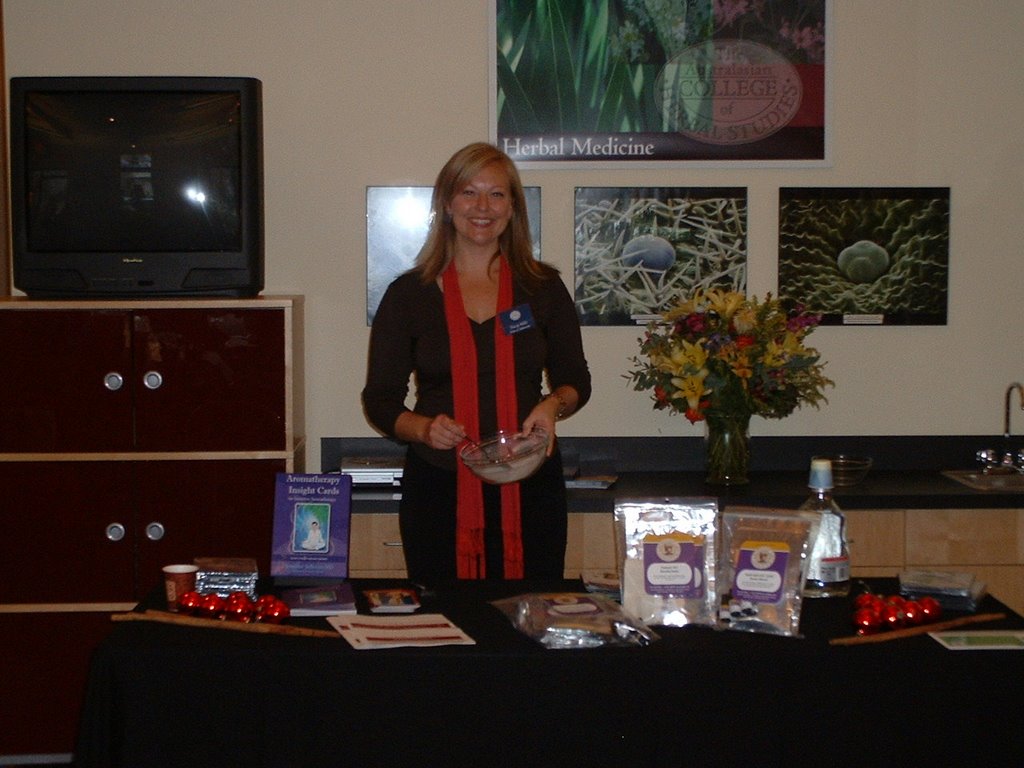
Below, ACHS Dean of Admissions Tracey Miller demonstrates preparation of the Winter Blahs Bath Salts, taken from the ACHS Aromatic Gifts Recipe Book. Click here to download your own copy of this great recipe booklet for making your own aromatic holiday gifts!


For special savings on all of your holistic health holiday shopping, visit us online at http://www.apothecary-shoppe.com!

The Apothecary Shoppe College Store - your source for organic supplies and tools for wellness, stocking a full range of therapeutic grade essentials oils, herbs, and hard-to-find reference books!

ACHS offers personal interest and career training programs in holistic health. Click here for the College Calendar of upcoming classes.

For more information about upcoming on-campus events at the College, visit us online here for the ACHS Community Wellness Calendar.

Sunday, October 15, 2006


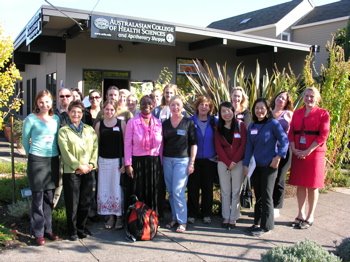
Over twenty budding herbalists gathered for Herb Day celebrations at the Portland, Oregon campus of the Australasian College of Health Sciences on October 13th. It was a crisp, sunny fall day and the herb identification walks in the ACHS Botanical garden on Hood Avenue and alongside the Willamette River were informative and enjoyable. The riverside walk revealed a wealth of wild botanicals, including red clover, plantain, wild carrot and dandelion. ACHS instructor, herbalist and Ayurvedic specialist Gia vonKarl demonstrated how to prepare a cough syrup. Gia formulated a blend just for Herb Day and attendees took home a sample. The formula and preparation instructions with all the herbs and additional ingredients are available as a kit from the College Store the Apothecary Shoppe. Other lectures and demonstrations included - How to Prepare a Tincture, The Top Ten Herbs You Need to Know, and a slide show of the Summer School in Greece. Free downloadable PDF's of the lectures are available by emailing achs@achs.edu. We all had a lot of fun making new friends and celebrating our joy and interest in herbs and herbal medicine.

Thursday, October 12, 2006

Listen to President Dorene Petersen on Voice of America


Click here and download the Mp3 file to listen to ACHS President, Dorene Petersen discuss Alternative Medicine on Voice of America on October 11th. If the link does not work try copying and pasting this url into your browser - http://www.voanews.com/english/NewsAnalysis/TTA-New-Past-Shows.cfm

Friday, October 06, 2006

Labelling Cosmetic Products

Many ACHS students and graduates prepare cosmetic products (including body lotions, shampoos, and soaps) using natural ingredients. You may prepare these for your own use, for friends and family, or for resale.

General Labeling Requirements
If you sell your products, you must comply with FDA regulations. These are set out online at:
http://www.cfsan.fda.gov/%7edms/cos-toc.html

The following is the general information from that site at http://www.cfsan.fda.gov/~dms/cos-labl.html but we strongly recommend that you read the full handbook.
Read this link ensure that you understand the difference between a cosmetic or a drug.
http://www.cfsan.fda.gov/~dms/cos-218.html

All cosmetics, whether they are sold on a retail basis to consumers or marketed exclusively for salon or workplace use, are subject to the FD&C Act. This law and regulations enacted under its authority require the cosmetic label to state the name and place of business of the manufacturer, packer or distributor; an accurate statement of the quantity of contents; and any appropriate directions for safe use and/or warning statements. This information must comply with additional regulatory requirements. It must be prominent and appear in the proper location on the label.
Regulations enacted under the FPLA require ingredients to be listed on the labels of cosmetics sold on a retail basis to consumers -- even if the label states "For professional use only." Consumers can use the ingredient declaration to identify ingredients they wish to avoid. Ingredients are listed in descending order of predominance, that is, with the ingredient present in the greatest amount listed at the beginning and those present in the smallest amounts listed at the end.
Special rules apply to the ingredient declaration on products that are both cosmetics and over-the-counter drugs. An example of such a product is an anti-dandruff shampoo: A shampoo is a cosmetic, while an anti-dandruff treatment is a drug. Regulations enacted in 1999 require such combination products to have the drug ingredients listed separately as "Active Ingredients," in alphabetical order, followed by the cosmetic ingredients, which are listed as "Inactive Ingredients" in descending order of predominance.

In addition to the immediate label, FDA regulates all cosmetic product "labeling." The definition of labeling includes all written, printed, or graphic matter that appears on the product, its containers, or its wrappers, as well as any such matter that accompanies the product. Typically, materials such as promotional literature, product catalogs, and flyers fit this definition of labeling. FDA also has considered promotional statements appearing on Internet sites to constitute labeling, especially on those sites where the promoted product can be purchased. However, unfair or deceptive advertising that appears in magazines, in newspapers, or on television generally falls under the authority of the Federal Trade Commission.
Contraindications
You are required to list "appropriate directions for use and/or warning statements" on your "label". How, you might ask, can you list these on a small label? After all, each essential oil or herbal formula may have several specific contraindications.
The answer lies in what the FDA considers to be "labeling". You will see that labeling includes flyers and, in most cases, websites. The most efficient way to include all the warnings relevant to your product is to asterix the items in question on the ingredients list, and include under the list, after the asterix, a reference to the directions for use and warnings information on the product flyer. On your product flyer, you can list your information easily. For your protection, you should include all warnings and contraindications for the ingredients in your product, even if you are using only a very small amount. This way, the consumer can decide whether they want to risk a reaction, not you!

For example, my essential oil massage blend might say:
Ingredients: Organic sweet almond oil, organic lavender Lavandula angustifolia essential oil, organic clary sage Salvia sclarea* essential oil.
* This ingredient should not be used if you are pregnant or nursing. Additional restrictions may apply, please refer to the product brochure or www.thebestnaturalproducts.com before use. Keep out of reach of children.
At the website or in the product brochure, a simple list of contraindications for the ingredients will suffice. If you have more than one product, you may wish to include a chart listing all the essential oils you use in alphabetical order.

ShareThis